Asking a good question is as important as providing a good answer.

For several years now, I have been conducting community philosophy classes by providing lots of answers – various theories, perspectives, points of view, etc.
Now I would like to run these sessions by having the community ask the questions. What are the philosophical questions that you want answered?
The way that I will run these classes will be much like an ‘open-mike’ session at you local music club: register a question with me that you would to discuss; come to a meeting that’s convenient to you; join in the discussion.
However there will be some basic ground rules. While we all know that some discussions – especially those dealing with ethical and political questions – can get fairly heated sometimes, for a conversation to progress there is a need for participants to respect other people’s point of view.
At the very least this involves the capacity to listen to another point of view without interrupting. At a more advanced level, conversation progresses when we can state an opposing point of view, fairly and accurately, without ridicule or sarcasm.
However, with that said, there will be no limit to what might be discussed. As an example, here are some of the things we talked about during the last week.
Career and Vocation
A career is one’s occupational course in the world; the word derives from the Latin carrus meaning a ‘wheeled vehicle’ – think of ‘carriage’. A vocation is one’s calling to pursue a certain path: the word itself actually derives from the Latin vocare meaning ‘to call’. Although originally restricted to religious contexts eg being called by God to be a priest, it is now used more wid ely to signify one’s suitability for a particular job, or, one’s
dedication to a certain activity, eg painting, that goes beyond the confines of mere employment. Hence one’s calling to be a painter could continue even if that person worked as a dish-washer.
What is the relationship between career and vocation? In general, one will have a career but not a vocation if they cease practising their art or skill when they cease to be employed to do it. Conversely one can have a vocation but not a career, if the person practices their skill or art even though they have never earned money by practising that skill. Socrates famously once said that he was never paid for the teaching that he gave.
The Gendered Basis of Conversation
Postmodern feminism is well known for its analysis of the gender bias of language. Language, it is argued, is irreconcilably constructed around gender lines. Think, for example, of how extensively, in common discourse, the word ‘he’ is used when referring to both men and women. A related issue is whether we can say certain conversational modes are gender based. Would we say that ‘assertiveness’ is a particularly masculine quality of conversation or that ‘empathy’ is a particularly feminine quality? Could we say that an assertive male who is also empathetic has both high masculine and feminine psychological traits? Would we say the same of empathetic women who are also assertive? Or are such distinctions between masculine and feminine false and artificial?
What is beauty?

Does beauty really exist or is it simply the expression of value towards something (usually a work of art) which we find pleasing? The subjectivist position in aesthetics is that beauty is simply what individual people find pleasing or good. This is also the sceptical position that beauty does not exist objectively or independently of people’s feelings and perceptions. What response can be made by those people who believe that beauty is objectively real?
Typically these people point to things that are commonly regarded as ‘beautiful’… for example, sunsets and the Mona Lisa. But the subjectivist will still reply that these examples is simply what you believe to be beautiful. Is there an objectivist answer that is compelling to the subjectivist?
What is polyamory?
The dominant Western model of loving, sexual relations is a marriage between a man and a woman. This is a one-on-one relationship model and is also common in relationships where the partners are not married or in homosexual relationships. On this model, sexual fidelity or faithfulness is declared to be the standard expectation or agreement between the participants. Breaking this, often unspoken, agreement is described as infidelity, or simply as ‘cheating’.
However there are other models of marriage and relationship. Polygamy is the marriage between several partners, most typically between one man and several women. This model is common in many non-Western cultures such as Islam and Polynesian cultures. It is also found in Mormomism.

Polyamory is a modern term, dating to only 1992. In 1999 the Oxford English Dictionary defined polyamory as “The practice, state or ability of having more than one sexual loving relationship at the same time, with the full knowledge and consent of all partners involved.”
The key ideas, then, involved in polyamory are firstly, that loving sexual relations occur between a number of people, and secondly these relations are undertaken with the knowledge and consent of all partners involved.
However, polyamorous relationships are different to ‘open’ relationships where sexual relations may occur with the knowledge and consent with all the people concerned, but that there is a lack of loving commitment in these sexual relations. The practice of polyamory raises interesting ethical and psychological issues. Is it possible to have loving relationships with multiple sexual partners? Won’t the emotion of jealousy always destroy any such attempts at polyamory? Is polyamory morally right?
An interesting discussion of the place of trust in polyamorous and monogamous relationships can be found here.
http://www.huffingtonpost.com/frances-amaroux/why-i-believe-in-polyamor_b_4138691.html

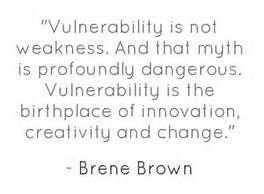
 What is empathy? Empathy is ‘feeling with’ another person: it is entering into the emotional life of that person. How do you feel empathy for another person? Empathy is achieved by being self-aware of the ways you experience another person, as a person. Once you have achieved this self-awareness, then you are free to enter into the emotional life of that person. To do this, you need to be curious: you need to listen, to ask questions, and to be sensitive to that person’s emotional state.


 ponse to our ‘existential’ situation. (Some existentialists also call this response fear, dread, or nausea.) The second is that our existential situation is that of being cut off or alienated from ‘Being’. For many Existentialists, there was a feeling of repulsion and rebellion that their individual freedom could be thought to be subsumed under the philosophical category of Being, as Hegel had suggested. They insisted that their ‘essence’ was something beyond the explanations of the natural world.
 ber of our Tuesday morning group, Chris, asked the great question of ‘How do we overcome our alienation?’ For many of the Existentialists, this was answered by asserting their freely chosen authentic experience, although how this was done varied greatly. It might be done, for example, by political activity, or it might be done by the practice of artistic creation. The question of Art as a means for existential transformation is a particularly interesting one because it not only involves the question of the struggle within the individual artist in dealing with their material, but also the wider social question of the transgression of social and political conventions by the work of art itself.

